
From "Chopsticks" to Chopin: Your Child's First Year of Piano Lessons
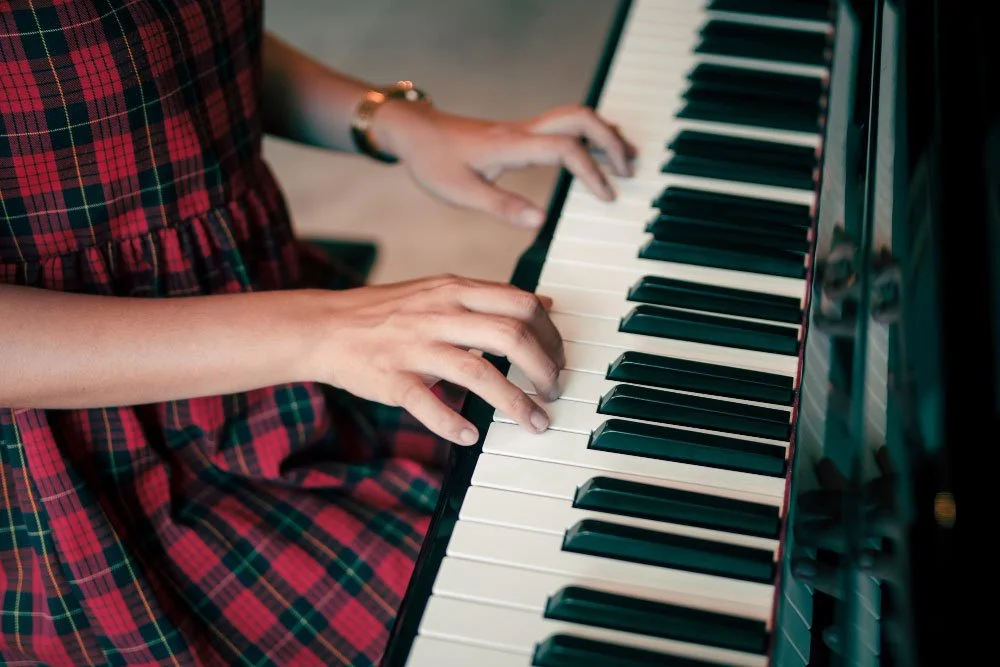
The moment arrives on a Tuesday afternoon in Mayfield Village. Your seven-year-old sits at the piano bench for the very first time, fingers hovering over the keys like they're made of glass. "What if I mess up?" she whispers.
Fast forward twelve months. That same child is playing a simplified version of "Für Elise" at the Great Lakes School of Music spring recital, her confidence evident in every phrase. Her grandmother cries. You try not to, but fail.
This transformation doesn't happen by magic. It happens one practice session, one scale, one tiny victory at a time. Here's what that journey actually looks like - the good, the challenging, and the surprisingly funny moments in between.
Months 1-3: The Foundation (AKA "Why Are We Still Doing This?")
What's Actually Happening:
Your child is learning the piano equivalent of the alphabet. They're discovering that those black and white keys have names (C, D, E...), that musical notes sit on lines and spaces, and that their left hand does something completely different from their right hand. It's like learning to pat your head and rub your stomach, but with more rules.
At Great Lakes School of Music, our teachers start with proper hand position - think of it as the piano version of good posture. Curved fingers, relaxed wrists, thumbs resting lightly on the keys. It feels weird at first. One parent recently told us her daughter kept saying, "My hands feel like spiders!"
What They're Playing:
Simple five-finger patterns. "Mary Had a Little Lamb" with one finger at a time. "Hot Cross Buns" is a milestone moment. These songs might sound elementary, but they're building crucial muscle memory and finger independence.
The Parent Reality Check:
Your child might resist practice. This is normal. They're building a new skill, and new skills are hard. The trick? Keep practice sessions short (10-15 minutes for this age) and consistent. Think of it like brushing teeth - non-negotiable, but brief.
Cleveland Parent Tip: Many of our Mayfield Heights families practice right before dinner. It's become part of the routine, like setting the table.
Months 4-6: The Breakthrough Moment
What's Actually Happening:
Something magical occurs around month four or five. Your child plays a song - a real, recognizable song - with both hands at the same time. This is when parents usually text us with videos and excessive exclamation points.
They're now reading simple sheet music independently. Their fingers are moving with more confidence. They're starting to understand that loud (forte) and soft (piano) aren't just words, but tools for expression.
What They're Playing:
"Ode to Joy" becomes achievable. Simplified arrangements of Disney songs appear in their book. At Great Lakes School of Music, we let kids choose some of their own pieces during this phase. Want to learn the Encanto theme? Let's do it.
The Parent Reality Check:
This is when the "I don't want to practice" battles might intensify, ironically, right when they're getting good. Why? Because the pieces are getting longer and require actual work. They can't just sight-read through them anymore.
One Beachwood mom told us, "My son loved piano when it was easy. Now he has to practice 20 minutes, and suddenly he's not sure about his life choices."
The Fix: Break practice into chunks. Ten minutes in the morning, ten at night. Let them take breaks. Celebrate small wins. "You nailed that tricky measure!" matters more than "Why didn't you practice the whole song?"
Months 7-9: Reading Music Like a Language
What's Actually Happening:
Your child is now reading music with increasing fluency. They're no longer hunting for every note - they're recognizing patterns, understanding key signatures, and beginning to play with dynamics and feeling.
They're also learning music theory: What's a rest? What makes a chord? How do you count in 3/4 time? It sounds dry, but good teachers (like ours at 781 Beta Drive) make it practical. "This is a quarter rest - it's like a breath when you're singing."
What They're Playing:
Simplified classical pieces (think easier Beethoven, straightforward Bach minuets). Contemporary pieces that actually sound cool. We've had kids at this stage playing everything from simplified Billy Joel to video game themes.
The Parent Reality Check:
Your child might hit a plateau. They've been doing this for seven months, and suddenly progress feels slower. This is normal. They're consolidating skills, not stagnating.
Cleveland Parent Tip: This is a great time to take them to a live performance. The Cleveland Orchestra has family concerts. Seeing professional musicians can reignite that spark.
Months 10-12: Performance Ready
What's Actually Happening:
Your child is preparing for their first recital. This is both exciting and terrifying - for them and for you. They're polishing 2-3 pieces, learning to perform under (gentle) pressure, and discovering that music is meant to be shared.
At Great Lakes School of Music, our recitals happen in a supportive environment. It's not Carnegie Hall. It's families gathered in our performance space, cheering for every student. Kids wear nice clothes, not tuxedos. Mistakes are expected and forgiven.
What They're Playing:
A curated mix: usually one piece they love, one classical piece, and maybe a duet with their teacher. The goal isn't perfection - it's confidence.
The Parent Reality Check:
Your child might get nervous. They might forget a section during the recital and have to start over. They might play flawlessly. All of these are okay.
One Gates Mills parent told us, "My daughter messed up her piece at the recital, stopped, smiled at the audience, and said 'Let me try that again.' Then she nailed it. I've never been prouder."
What Parents Need to Know: The Non-Negotiables
1. Practice Doesn't Mean Perfect
The goal of practice isn't to play everything correctly. It's to play everything better than yesterday. Some days, better means getting through the piece without stopping. Other days, it means nailing that one tricky measure.
2. Every Child's Timeline Is Different
Some kids zoom through Book 1 in six months. Others take a year. Both are fine. Music isn't a race.
3. The Three Ps: Patience, Praise, and Pizza
Be patient with the process. Praise effort, not just results ("I love how you kept trying that hard part!"). And yes, pizza after a tough practice week is absolutely fair game.
4. Your Job Isn't to Teach - It's to Support
You don't need to know music to help your child succeed. You just need to:
Ensure they sit down to practice
Show interest ("Play me what you learned today!")
Attend their lessons occasionally
Celebrate their progress
When Things Get Hard: Real Talk
Around month 8 or 9, many kids want to quit. They've been doing this for a while, it's getting harder, and the novelty has worn off.
Here's what we tell Cleveland parents: Don't let them quit on a bad day.
If they want to quit after a frustrating practice, say, "Let's talk about this in two weeks." Usually, they'll have a good lesson or nail a tricky piece in that time, and the feeling passes.
But if after three months of consistent unhappiness they still want to stop? It's okay. Music lessons should enhance childhood, not ruin it. That said, we find that 90% of kids who stick through the tough patches end up loving piano for years.
The Payoff: What You'll See by Month 12
By the end of year one, your child will:
✓ Read music independently
✓ Play with both hands simultaneously
✓ Understand basic music theory
✓ Have 10-15 pieces in their repertoire
✓ Perform in front of an audience
✓ Have developed discipline, patience, and confidence
But here's the real magic: They'll have a skill that's theirs. Something they created. When the world feels chaotic, they'll have 88 keys where they can express themselves.
What Makes Great Lakes School of Music Different?
Located at 781 Beta Drive in Mayfield Village, we've been guiding Cleveland-area children through this exact journey for years. Our teachers don't just teach notes - they teach resilience, creativity, and joy.
We serve families from Mayfield Heights, Lyndhurst, Beachwood, Pepper Pike, Highland Heights, Solon, and surrounding communities. Our scheduling is flexible because we know Cleveland families are busy. Weekend lessons? We've got you. Weekday afternoons? Those too.
Every student gets a customized learning plan. Some kids love classical music. Others want to play pop songs. We meet them where they are and take them where they want to go.
FAQs: What Cleveland Parents Actually Ask Us
Q: How much should my child practice?
A: At this age, 15-20 minutes daily is ideal. Consistency matters more than length. Seven days of 15 minutes beats one day of two hours.
Q: What if we don't have a piano at home?
A: A full-size keyboard with weighted keys works for the first year. You can rent or buy. Many Cleveland families start with keyboards and upgrade to pianos later.
Q: Can my child switch instruments later?
A: Absolutely. Many students start with piano and later add guitar or drums. Piano gives them a musical foundation that transfers to any instrument.
Q: What if my child isn't naturally musical?
A: There's no such thing as "not musical." Music is a learned skill, like reading. Some kids pick it up faster, but all kids can learn with good teaching and consistent practice.
Q: How do I know if my child is too young?
A: We typically start piano at age 5, but it depends on the child. Can they sit still for 20 minutes? Can they follow multi-step directions? Do they show interest? If yes, they're probably ready.
Q: What about performance anxiety?
A: We work on this all year. Students perform for their teacher, for parents, for small groups before the big recital. By performance day, it feels less scary because they've done it before - just with a bigger audience.
The Truth About Year One
It's not always Instagram-perfect. There will be tears over tricky measures. There will be fights about practice. There will be moments when you wonder if you made the right choice enrolling them.
But there will also be the afternoon when your child sits down and plays something beautiful without being asked. There will be the recital where they bow to applause. There will be the day - maybe years from now - when they tell you music was one of the best parts of their childhood.
From "Chopsticks" to Chopin (well, simplified Chopin) in twelve months. It's a journey worth taking.
Ready to Start Your Child's Musical Journey?
At Great Lakes School of Music in Mayfield Village, we're ready to guide your child through an incredible first year of piano. Our experienced teachers make learning engaging, our scheduling is flexible, and our focus is on creating confident, joyful musicians.
Piano lessons are available for ages 5 and up. We also offer guitar and drum lessons for older students.
Contact us today to schedule your child's first lesson.
📍 781 Beta Drive, Suite K, Mayfield Village, OH 44143
📅 Book Your First Lesson
